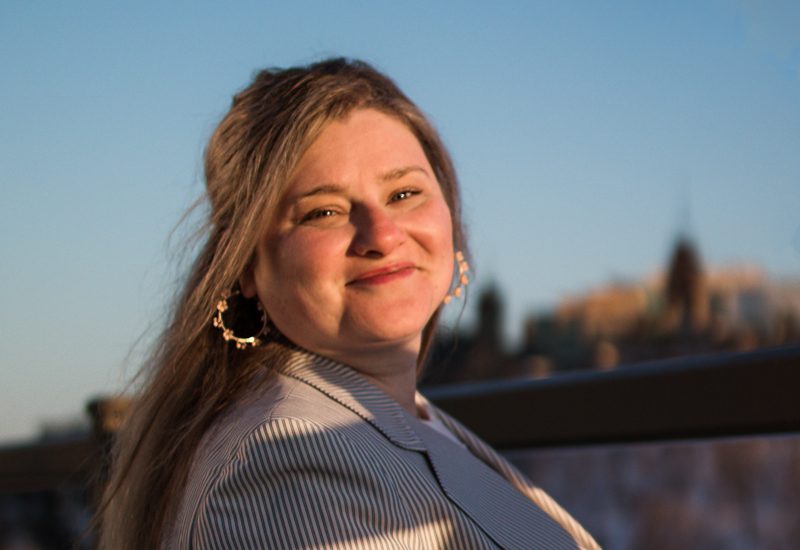
I help nonprofits, governments, and community organizations identify unmet needs, design and improve programs, and turn complex community challenges into practical, testable solutions. From a problem you can’t quite solve to a program that needs to work better, I bring strategy, creativity, community insight, and implementation together.
I’m a community innovation and program design consultant. I work with nonprofits, governments, and community organizations to identify gaps, design practical solutions, and improve the programs and systems people rely on.
My practice sits between strategy, creativity, community development, and implementation. I’m at my best when someone brings me a problem no one has quite figured out yet, an unmet need, an underperforming program, a system that isn’t working, and we build a practical path forward together.
My specialized expertise includes trauma-informed program design, ethical lived-experience integration, survivor-led systems, and gender-based violence, exploitation, and human trafficking response. That specialization runs deep, and it shapes how I approach every engagement, but it’s no longer the boundary around what I do. It’s part of my depth.
Outside my consulting practice, I’m also the founder of ElevateHER , a separate nonprofit organization with its own board and programming, and I’m developing MindBank, a social-impact initiative. My consulting practice may collaborate with these on pilots or community initiatives, but the three are distinct.
Selected recognitions across business, leadership, and humanitarian sectors, reflecting more than a decade of work in survivor-led systems change.
My methodology for community innovation and program design, a seven-part framework for moving from an identified need to a practical, tested, sustainable solution. Trauma-informed and lived-experience principles inform how I use it. The framework itself applies broadly across social-impact and community work.
Understand what currently exists, the program, the system, the community context, what’s already working, and what isn’t.
Identify the actual gap, barrier, or unmet need, separating the symptom from the underlying problem.
Develop practical possibilities and design a solution that fits the community, the constraints, and the goal.
Test assumptions with the people affected, available evidence, and relevant stakeholders, before scaling anything.
Turn the idea into an actionable model, prototype, or pilot with clear structure, timelines, and accountability.
Learn from implementation and refine what isn’t working, adjusting the model as evidence comes in.
Build the tools, capacity, and structure needed for the work to continue sustainably once I’m no longer in the room.
Most of my work starts with a version of one of these four questions. Every engagement is custom-scoped, but here’s how the shape of the work usually breaks down.
Taking an identified need and turning it into a practical, testable program, from concept through pilot design.
Getting underneath the surface problem to find the actual gap, then setting practical priorities.
Taking a program that’s underperforming and figuring out what to change, and how.
Translating strategic goals into programs, processes, and accountability people can actually work with.
A three-tier engagement for organizations whose staff are exposed to others’ trauma. Workshop, 90-Day Wellness Pulse, and ongoing support. Limited pilot spots.
Across the four areas above, I bring specialized expertise for organizations working in or adjacent to gender-based violence, exploitation, and trauma-response fields, or any organization that wants to embed ethical, non-tokenizing lived-experience integration into its programs and systems.
Not sure which one fits? That’s often the starting point.
Bring me a problem →Where I develop, prototype, and test community program ideas, publicly, and with honest labels. Concept, prototype, pilot, evaluate, refine. Nothing is called “proven” until it is.
A different approach to social isolation and belonging.
Creating somewhere for people to attend doesn’t automatically create meaningful connection. Community Connection is a structured 6–8 week community program built around shared experiences and doing things together, not forced disclosure or artificial vulnerability.
Programs designed, systems redesigned, and gaps closed, across federal, provincial, and community contexts. Full case studies coming as I finish anonymizing and structuring them.
Designed and delivered curriculum, facilitator materials, and Train-the-Trainer infrastructure for a nationally recognized trafficking & exploitation prevention program.
Consultation, program design, and delivery in partnership with federal correctional services, translating community expertise into institutional practice.
Developed survivor-informed frameworks and advisory-model designs used by nonprofits and justice-adjacent organizations to move beyond tokenism.
Facilitated consultations, focus groups, and planning sessions across community and justice-focused sectors to inform program design and organizational direction.
Work has included partnerships and projects with Correctional Services of Canada, Stella’s Circle, Elizabeth Fry Society (Mainland Nova Scotia and Cape Breton), and collaborations across community and justice-focused sectors, supported through federal, provincial, and municipal funding.
Whether you’re trying to figure out why something isn’t working, designing a program from scratch, or turning a strategy into something people actually do, here’s how we start.
A brief conversation to understand your goals, assess alignment, and determine fit.
A focused working session to assess current systems, identify gaps, and explore strategic directions, with immediate clarity.
A tailored proposal outlining 2–3 engagement options based on your needs, scope, and outcomes.
You select the level of support that aligns with your priorities, timeline, and budget.
Structured support to implement strategies, strengthen systems, and build long-term capacity.
The best conversations start with an unmet need, an underperforming program, or a question no one on your team has quite been able to answer. If you have something like that, I’d like to hear it.
Available across Canada and globally, in-community and virtually.